Today is Thursday and time for Rain's Thursday Art Date, or TAD. I'm going to talk about a subject near and dear to me today: voting. On Tuesday (June 7), seven states held primary elections. They were California, Iowa, Mississippi, Montana, New Jersey, New Mexico, and South Dakota. Voting has never been more important than in this current climate.
Let’s begin with voting rights. In 1776 and before, only men who owned property, who were mainly white, Christian, and over 21, had the right to vote. The new country decided voting rights, which were similar to those in England.
 These laws stipulated that only "free holding" men, or those who owned property and paid taxes, could vote.
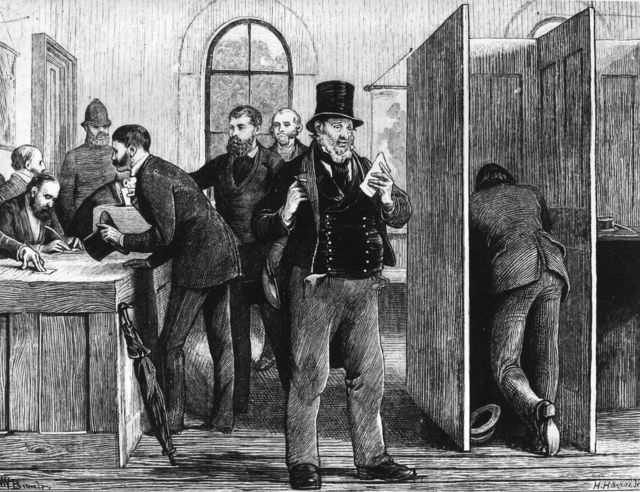 Fast forward to 1856, where all white men, whether they owned property or not, were given the right to vote.
 Let’s forge ahead to 1870, and the 15th amendment. “The right of citizens of the United States to vote shall not be denied or abridged by the United States or by any State on account of race, color, or previous condition of servitude.” This was followed closely after the 13th amendment that abolished slavery and the 14th amendment that guaranteed citizenship to African Americans had been signed into law. However, poll taxes, literacy tests, and grandfather clauses, along with threats against black men kept them away from the polls. Poll taxes in federal elections were abolished in 1964 by the 24th Amendment. Then came the Voting Rights Act of 1965, where all African Americans, even black women were finally allowed to vote.
 White or Caucasian women, on the other hand, have had the right to vote since 1918, when the 19th amendment was passed. There were some stipulations, though. If a white woman was over 30, she was allowed vote. Then in 1928, all white women over the age of 21 were allowed to vote.
The 19th amendment prohibited discrimination on the basis of sex, but it did not address other kinds of discrimination that many American women faced: women who were excluded on the basis of race. Native American, Asian American, Latinos, and African American women had to fight long after the 19th Amendment was ratified.
Native American and Asian-American women were often denied citizenship by the federal government, meaning they could not vote because they were not recognized as citizens.
In 1924, American-born Native American women gained citizenship. But until as late as 1962, individual states still prevented them from voting on contrived grounds, such as literacy tests, poll taxes, and claims that residence on a reservation meant one wasn’t also a resident of that state. They also were faced with fees and "competency tests.”
Native-born Asian Americans already had U.S. citizenship in 1920, but first generation Asian Americans did not. Asian American immigrant women were therefore excluded from voting until the Immigration and Nationality Act of 1952 allowed them to gain citizenship more than three decades after the 19th Amendment. Despite being barred from citizenship and from voting, they joined Native American women in their quest to vote.
Latino women contributed to the success of the movement at both the state and federal levels. Literacy tests remained an effective means of keeping some Hispanic and other women of color from voting long after the federal amendment was passed. It took a 1975 extension of the Voting Rights Act, prohibiting discrimination against women who rely heavily on languages other than English. Now, non-English-speaking voters must be provided with instructions or assistance in registering and voting. Voters with limited English must be given access to translators and ballots in multiple languages.
In July, 1971, the 26th amendment lowered the voting age from 21 to 18.
Some African-American women in the north were able, with help of the 19th Amendment, to realize the rewards of their activism, but throughout much of the country the same voter suppression tactics that kept black men from the polls kept black women from voting, too. Literacy tests, poll taxes, voter ID requirements, intimidation and threats, and acts of violence were all obstacles. The struggle continued until the passage of the Voting Rights Act of 1965.
In 1984, the Voting Rights Act was expanded to include voting accessibility for the elderly and the handicapped.
Sadly, it doesn’t stop there. In 2013, a section of the Voting Rights Act was declared unconstitutional, leading to a massive wave of state laws establishing voter ID requirements, closed polling stations, restrictions on vote by mail, and limited voting hours. These included polling place closures, voter ID laws, limited early voting, and limits to pre-registration.
That is the case in Kansas. We were one of, or possibly the first state to require a valid voter ID card (driver's license, or state issued ID card). I read that one state now requires anyone over the age of 65, whether they have voted for the past (for example) 40 years or not, now must register with their city or county election office in order to vote in the upcoming election.
After the 19th Amendment, the work to secure the vote for all women has continued. It will continue until every woman in America who can legally vote has the right to do so.
Here are 25 places where and when women were given the right to vote:
New Zealand, 1893; Finland, 1906; Denmark, 1915; Iceland, 1915; Canada, 1916 (white females only); Russia, 1917; Germany, 1918; United Kingdom, 1918; United State, 1920; Brazil, 1932; Turkey, 1934; France, 1944; Japan, 1945; India, 1947; Greece, 1952; China, 1953; Mexico, 1953; Honduras, 1955; Egypt, 1956; Canada: First Nation women won the right to vote in 1960; Australia: Indigenous Australians won the right to vote in 1962; The Bahamas, 1962; Switzerland, 1971; Iraq, 1980; Oman, 1994; and Saudi Arabia, 2015.
Thanks for listening to my diatribe. I hope you vote in your primary and the general election this November. If ever there was a reason to exert your voice by voting, it is now!! That includes whatever country from which you are visiting today.
Now let's join Rain and her Thursday Art Date to see what others are sharing this week.








.JPG)


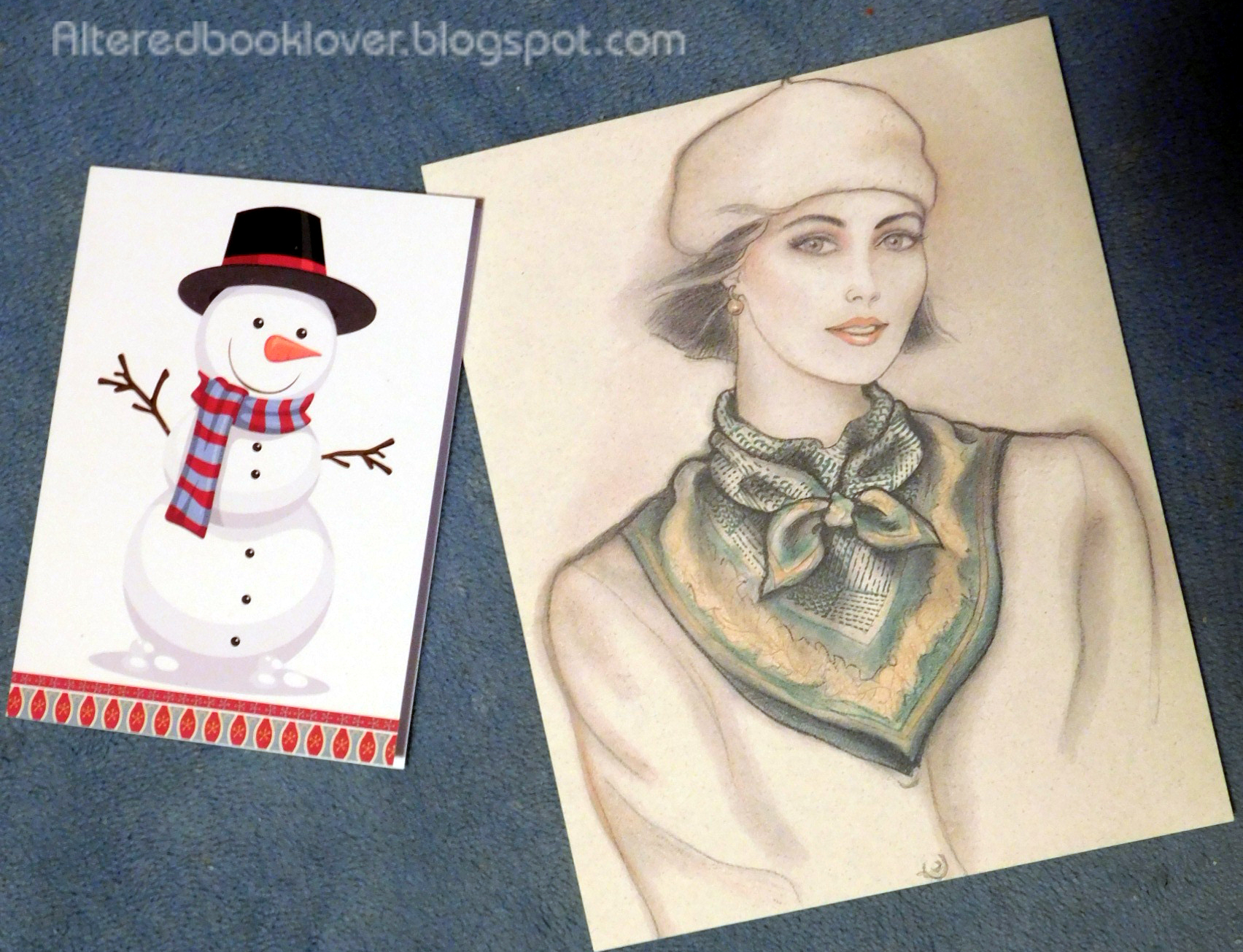 Rain's prompt for this week is scarf. Since both of these have a face, I'm also joining Nicole and her Friday Face Off.
 mandarin oranges that I have peeled. These are really delicious and I will share how I used them soon. Right now, all I have are the oranges.






 Maybe you thought I would choose Food Fodder as a collage of choice.
 Or this one called Tools.
  Locked: Pigment ink, scrapbook paper, paper scraps, embellishments, magazine image. This collage also has a face for
  Designed by Architects: scrapbook paper, hand painted paper, magazine images, mica powder added to silverware handles.
 Cry Baby: images from various magazines, computer generated text, and matching background design. Another face for
 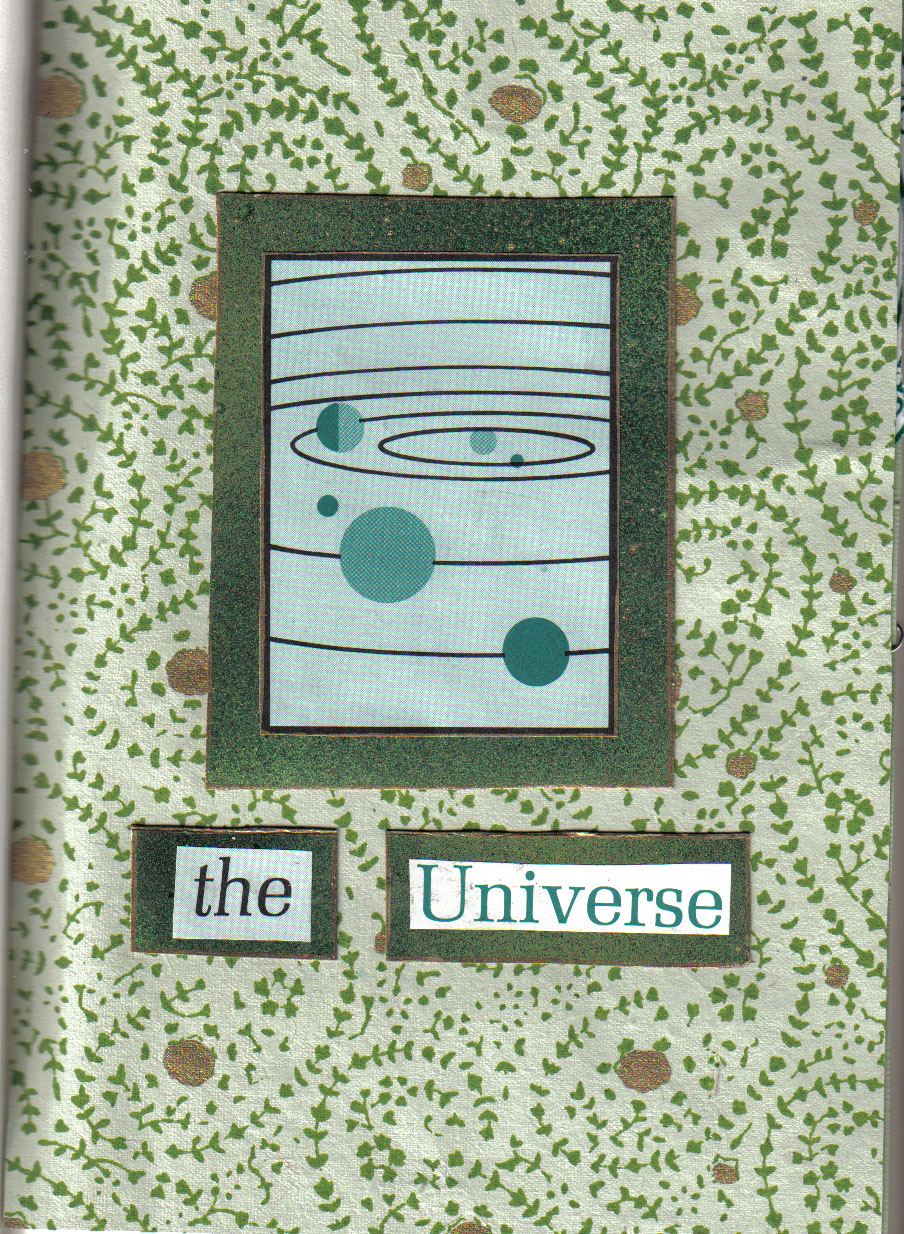 The Universe: textured handmade, hand painted background
paper, cardboard mats spray painted green and gold, trimmed in gold ink,
words and central image from a science book.
The Universe: textured handmade, hand painted background
paper, cardboard mats spray painted green and gold, trimmed in gold ink,
words and central image from a science book.  Word: textured background paper, hand painted and stamped (by me)
frame, focal image was part of a swap exchange, words are from a
magazine. A third face for
Word: textured background paper, hand painted and stamped (by me)
frame, focal image was part of a swap exchange, words are from a
magazine. A third face for  Christmas Kitsch: adorable images fussy cut from a magazine, hearts cut from painted book pages, three tickets, shaving cream paper background. Really adorable faces for
  The Ringmaster: fussy cut magazine image, fussy cut botanical book image, ticket. Yet another face for
 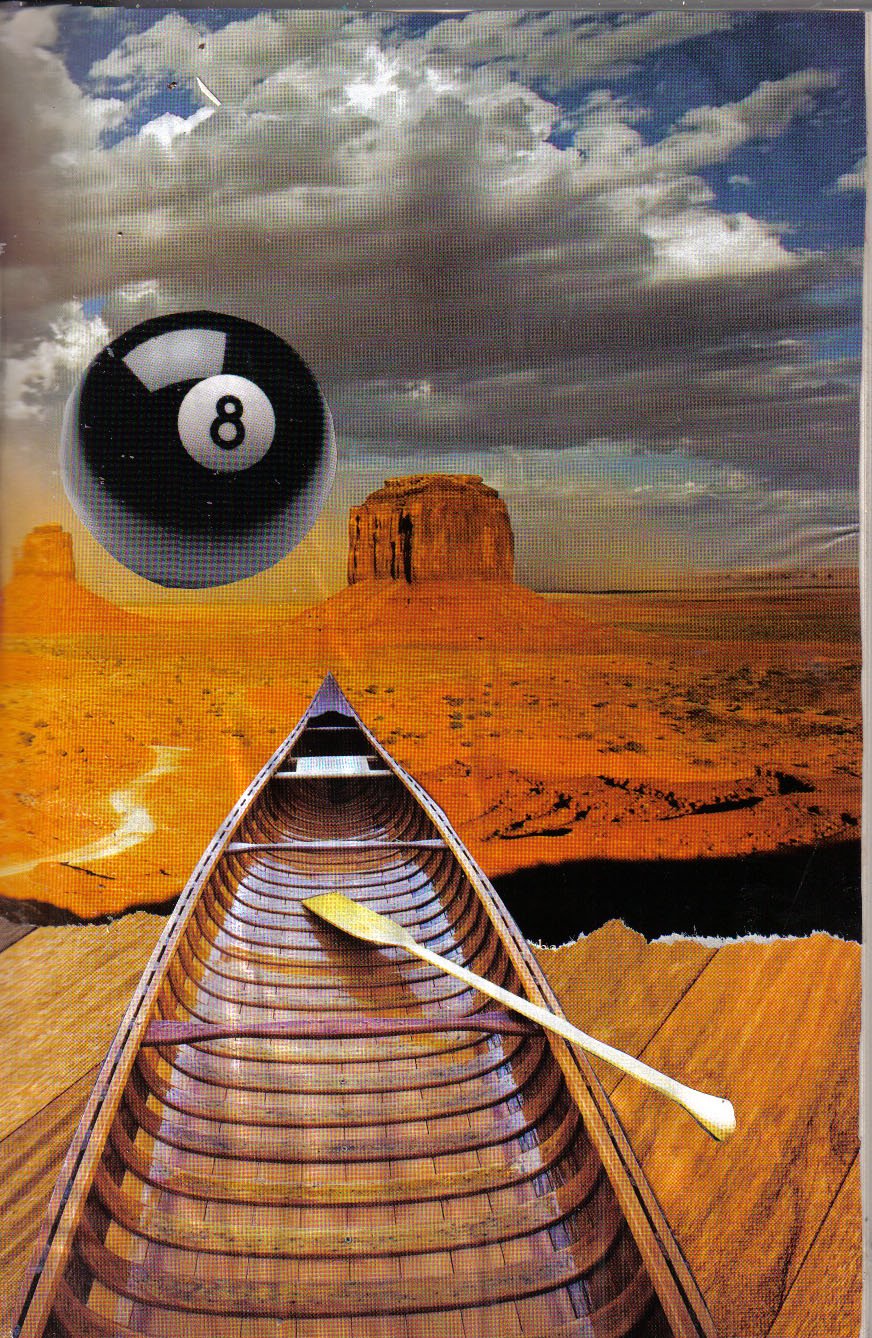 Behind the Eight Ball: Images taken from four different magazines. Rowboat and eight ball were fussy cut. Possibly my favorite collage of all.




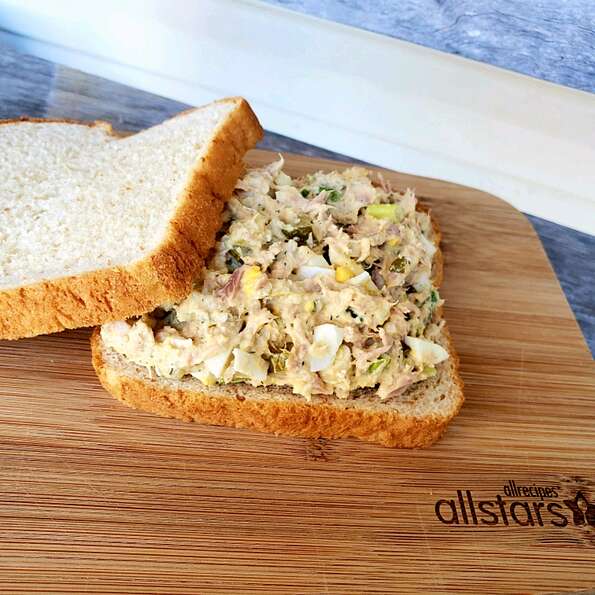 The definition of tuna salad is "tuna and mayo." According to
  This might seem like a cop out to
  An earlier view of my dill shows how much I love it. I have at least four pots of dill. Three are for me and one is for the swallowtails whose caterpillars munch through it like it is candy. I realize I'm a couple days late, but I'm joining







 Dollar Exchange Rate