

.JPG)


I've been wanting to get back into dyeing fabric, so today I thought I would head back to October, 2011 and share the
Tale of the Honey Bear
 This story begins with a honey bear. This honey bear originally held
honey, but now it holds nothing. However, because it is so pliable, it
is the perfect solution for a person like myself, born with a rare form
of arthritis, who can't squeeze a pastry tube. This honey bear will
help tell the tale of a fabric technique I have shown before, but have
now modified.
This story begins with a honey bear. This honey bear originally held
honey, but now it holds nothing. However, because it is so pliable, it
is the perfect solution for a person like myself, born with a rare form
of arthritis, who can't squeeze a pastry tube. This honey bear will
help tell the tale of a fabric technique I have shown before, but have
now modified. Oh look. The honey bear is hiding!
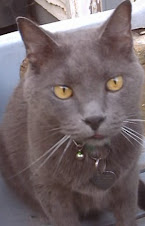
 On the other hand, Bleubeard is not
hiding, but wandering out into the shady part of the grass (or what is
left of it after this long, record breaking, hot, very dry summer). ED: Sounds like the summer of 2018, but I swear this post is from 2011.
On the other hand, Bleubeard is not
hiding, but wandering out into the shady part of the grass (or what is
left of it after this long, record breaking, hot, very dry summer). ED: Sounds like the summer of 2018, but I swear this post is from 2011. He appears to be studying where the shade ends and the sun begins.
 We'll leave him to his devices while we check out the materials for this
project. You can see I've now added a few items to the table that I
initially failed to bring outside.
We'll leave him to his devices while we check out the materials for this
project. You can see I've now added a few items to the table that I
initially failed to bring outside.Materials clockwise from back left:
Bleubeard (OK, he's just for show and not part of the materials)
Bucket filled with four cups of water
Empty cup to use in design
Several plastic bags, some new, some used, to cover work surface and hold fabric in place
Flour designated for crafting only
Fabric torn in various sizes
Empty honey bear container
Squeegee
Painters tape (low tack)
1 cup measuring cup partially filled with additional water
1/2 cup measuring cup
Chop sticks for stirring and writing
Plastic bag to cover work surface
 The tale begins with the 4 cups of cold water, a chop stick for
stirring, flour, and part of an old sheet that was taped to the plastic
for stability.
The tale begins with the 4 cups of cold water, a chop stick for
stirring, flour, and part of an old sheet that was taped to the plastic
for stability.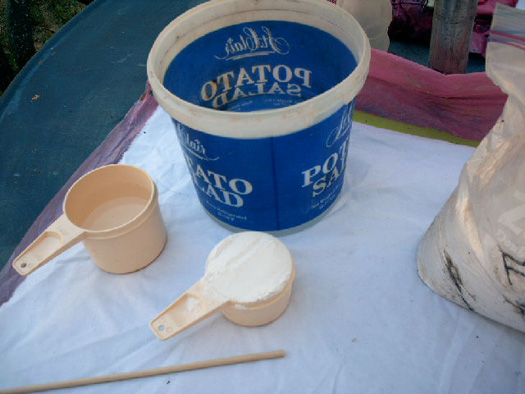 It continues when I measure the flour which I plan to add 1/2 cup at a time, beating until all lumps are gone.
 It didn't take long until I realized the chop stick was not the right
tool for stirring 4 cups of flour into the water, so it was off to the
house for a "bigger stick."
It didn't take long until I realized the chop stick was not the right
tool for stirring 4 cups of flour into the water, so it was off to the
house for a "bigger stick." A whisk made much quicker work of the process.
 Once the flour was well mixed with the water,
 the little honey bear took over to tell the tale.
 Because his squeeze top would leak at this angle, I placed the cover
back on him. You can see the flour/water mixture is quite wet and took
well to the fabric. The honey bear is pleased.
Because his squeeze top would leak at this angle, I placed the cover
back on him. You can see the flour/water mixture is quite wet and took
well to the fabric. The honey bear is pleased. The little honey bear held a lot of mix, as is evident even after I
added the mix to the second fabric. I'm not very good with "random"
patterns, but I really tried to make these random both in size and
position.
The little honey bear held a lot of mix, as is evident even after I
added the mix to the second fabric. I'm not very good with "random"
patterns, but I really tried to make these random both in size and
position. There was still some flour/water mix left in the honey bear after I
attempted writing. Now you see why I don't like my handwriting.
There was still some flour/water mix left in the honey bear after I
attempted writing. Now you see why I don't like my handwriting. Finally, after all kinds of squiggles and words of love, the honey bear was now quite empty!
I left each piece of fabric taped to its plastic backing and laid them on the ground to dry.
 I replaced the honey bear's lid and placed it aside so it wouldn't dry
before I could clean it. Then I added another 1/2 cup of flour, because
I felt the mix was a bit too thin for spreading.
I replaced the honey bear's lid and placed it aside so it wouldn't dry
before I could clean it. Then I added another 1/2 cup of flour, because
I felt the mix was a bit too thin for spreading.Next, I ran a bead of mix across the above fabric and used the squeegee to spread the mix. However, I accidentally deleted the photo of that step. And when it was gone, it was most assuredly and most horribly gone (to paraphrase the Wizard of Oz)!
 You can see the results of the squeegeed fabric with the word "love"
written several times using a chop stick (ED: sgraffito technique). When I tried to lift the
fabric, it was now too heavy, so I left it in place and
You can see the results of the squeegeed fabric with the word "love"
written several times using a chop stick (ED: sgraffito technique). When I tried to lift the
fabric, it was now too heavy, so I left it in place and moved to the other side, only to discover where Bleubeard had been
napping after I started to pull the chair away from the table to take
the photo.
moved to the other side, only to discover where Bleubeard had been
napping after I started to pull the chair away from the table to take
the photo.  You can see the squeegee in the upper left of the photo. I used the
same technique on this fabric, running a thick bead of mix along the top
of the fabric and using the squeegee to spread the mix. I then used
the old cup to make circular impressions in the mix.
You can see the squeegee in the upper left of the photo. I used the
same technique on this fabric, running a thick bead of mix along the top
of the fabric and using the squeegee to spread the mix. I then used
the old cup to make circular impressions in the mix. It was quite windy by this time, so I had to weigh the plastic down on the edges while the fabric dried a bit. I then cleaned the materials that had mix in or on them and returned them to their proper storage places. Once dry enough to move, I took all the fabric pieces with the plastic intact, inside overnight.
 The next morning, although it was quite windy, I hung each of the fabric
pieces on the line. Some of the pieces are beginning to curl at the
bottom. This is to be expected.
The next morning, although it was quite windy, I hung each of the fabric
pieces on the line. Some of the pieces are beginning to curl at the
bottom. This is to be expected. You can see the flour/water mix is beginning to dry, because it is starting to change colors. As an aside, don't you just adore my clothespin bag made by a friend? She used tea dyed fabric in the design.
 For now, this is my favorite piece, maybe because it took the longest to
make, and maybe because I anticipate visualizing how it will look once
the paint is added.
For now, this is my favorite piece, maybe because it took the longest to
make, and maybe because I anticipate visualizing how it will look once
the paint is added.  I began with this rag I used to clean up the remains of the flour/water
mix. The honey bear has served his purpose, has been cleaned, and is now safely
tucked away in his hiding place in the basement.
I began with this rag I used to clean up the remains of the flour/water
mix. The honey bear has served his purpose, has been cleaned, and is now safely
tucked away in his hiding place in the basement.A bit of explanation about resist dyeing. Using flour is basically the same as using wax, only less difficult to remove afterward because it doesn't require an iron or steaming process. You can also use oatmeal, mashed potatoes, or malt-o-meal. Ideally, you should add a bit of liquid fabric softener (the brand I use is Sta Flo) when you mix the flour with the water, but I forgot mine and was too lazy to get it.
 The flour resist dries hard and sticks to the fabric, even when exposed
to gale force Kansas winds. It doesn't come off easily by itself, but
can be removed with water. One way to add a batik look to the dried
flour is to scrunch the fabric, then straighten it out. In order to put
a few breaks in the flour resist, I had to peel it away. The fabric is
still attached to the plastic bag via the low tack tape at one end,
because I have enough spilled color on my worktable as it is.
The flour resist dries hard and sticks to the fabric, even when exposed
to gale force Kansas winds. It doesn't come off easily by itself, but
can be removed with water. One way to add a batik look to the dried
flour is to scrunch the fabric, then straighten it out. In order to put
a few breaks in the flour resist, I had to peel it away. The fabric is
still attached to the plastic bag via the low tack tape at one end,
because I have enough spilled color on my worktable as it is. I began by adding a bit of Golden fluid acrylic to the fabric. Remember, anywhere there is flour, there will be NO paint. That's why it is known as a resist technique.
Also be aware that you cannot use color mists and dyes using this technique. The mists and dyes will wash away when you remove the flour. I suspect you could use Staz-on reinkers, since they are waterproof, but I prefer to simply use acrylic paint.
 The fabric has now been painted. I could have kept it off the flour,
but it was easier to paint the entire cloth. I broke down and thinned
the fluid acrylics with a bit of water because I wasn't getting the
coverage I expected. The flour began to smell like . . . WET FLOUR.
The fabric has now been painted. I could have kept it off the flour,
but it was easier to paint the entire cloth. I broke down and thinned
the fluid acrylics with a bit of water because I wasn't getting the
coverage I expected. The flour began to smell like . . . WET FLOUR. This is a lousy photo, but I took it late, late at night and the
lighting in the living room is ambient, rather than illuminating.
Another good reason for keeping the plastic backing, was evident as I
left the various fabrics to dry on my area rug. I used red acrylic only
for these three fabrics.
This is a lousy photo, but I took it late, late at night and the
lighting in the living room is ambient, rather than illuminating.
Another good reason for keeping the plastic backing, was evident as I
left the various fabrics to dry on my area rug. I used red acrylic only
for these three fabrics. The next day it rained. And rained, and rained, and rained. In fact,
it rained for two solid days. When I was finally able to make it
outside, I set these pieces on my garden fence because it was close to
my outdoor faucet and hose. Then I turned the sprayer to the "fiercest"
setting and proceeded to blast my fabric until the flour was loosened.
The next day it rained. And rained, and rained, and rained. In fact,
it rained for two solid days. When I was finally able to make it
outside, I set these pieces on my garden fence because it was close to
my outdoor faucet and hose. Then I turned the sprayer to the "fiercest"
setting and proceeded to blast my fabric until the flour was loosened.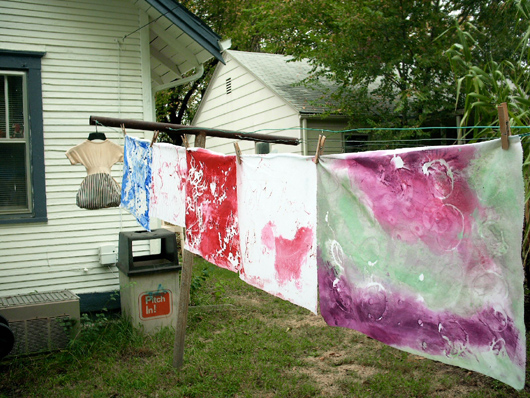 When all the flour had been removed, I washed the fabric and hung it on the line.
 Under no circumstances can you remove
this flour in your house. You must use a bucket of water, allow the
fabric to soak, then use a scrub brush to remove the dried on flour.
Alternately, you can use the power position on your hose sprayer like I
did. I was afraid to use my power washer because I feared it would damage the fabric.
Under no circumstances can you remove
this flour in your house. You must use a bucket of water, allow the
fabric to soak, then use a scrub brush to remove the dried on flour.
Alternately, you can use the power position on your hose sprayer like I
did. I was afraid to use my power washer because I feared it would damage the fabric.The above design turned out to be one of my favorite pieces. I used lavender and pale green acrylic paints on this piece. Somehow, I allowed the watered down acrylic to bleed under some of the flour, but I felt that added to the charm of this piece. Be aware this piece will dry lighter than it is at the moment.
 You can see the "love" was nearly lost in this fabric on the right made
using the squeegee and a chop stick. The only place it took color was
where I watered down the red acrylic paint. The one on the left was a
better example of painted fabric using my beloved honey bear. The white
is where the honey bear left his mark.
You can see the "love" was nearly lost in this fabric on the right made
using the squeegee and a chop stick. The only place it took color was
where I watered down the red acrylic paint. The one on the left was a
better example of painted fabric using my beloved honey bear. The white
is where the honey bear left his mark.  The piece on the left is the one I showed in the beginning of this post.
It held the leftover paste that I cracked. I really like those random
cracks. The marks on the fabric on the right were made using the metal
cup. It turned out rather bland, I thought once all the flour was
washed away.
The piece on the left is the one I showed in the beginning of this post.
It held the leftover paste that I cracked. I really like those random
cracks. The marks on the fabric on the right were made using the metal
cup. It turned out rather bland, I thought once all the flour was
washed away. A small portion of the piece I really liked is shown above. I used my
scanner to show the subtle marks that didn't show when the fabric was
still wet on the clothesline.
A small portion of the piece I really liked is shown above. I used my
scanner to show the subtle marks that didn't show when the fabric was
still wet on the clothesline. This piece looks like some of the flour paste is still on it, but I assure you, there is no flour left in this fabric.
 This piece is a hoot! I laid a magazine on the back of the fabric and
it showed through the scan. That shows how thin this sheet was.
This piece is a hoot! I laid a magazine on the back of the fabric and
it showed through the scan. That shows how thin this sheet was. The same thing happened to the "love" fabric. That sheet was quite
thin, too. I could have rescanned, but I had already put the fabric
away before I checked the scans. Sometimes it doesn't pay to be
organized.
The same thing happened to the "love" fabric. That sheet was quite
thin, too. I could have rescanned, but I had already put the fabric
away before I checked the scans. Sometimes it doesn't pay to be
organized.Ruminations:
I now believe there is a fine line between the amount of flour and water I used. I do not believe equal parts of flour and water are the way to go. I will need to experiment with the quantities of each, but I think I started with too much water and didn't add enough flour to the mix. I hope to experiment some more before the weather turns too chilly to work outside.
The final chapter in this saga will occur when I actually make something out of these various fabrics. I truly hope this tutorial has been helpful and addressed any questions you might have had about this technique.
_______________________________________________________
Now it's time to share your own Second on the 2nd. The rules are quite simple and everyone is welcome to join the fun look back. All you have to do is bring back a post that you are especially proud of, or perhaps one you shared before anyone knew your blog existed. Any post, any genre, any artistic endeavor is acceptable. Then link below (direct links only, please) and Bleubeard and I, along with other Second on the 2nd friends, will be by to visit. Please be aware this link is only open for five days, so linking on the 2nd is preferred.







 Dollar Exchange Rate