Sunday, July 31, 2011

July and August calendar pages

I happened to notice that Kate had her July pages finished and on her blog. I have completed my July calendar, and have also started my August pages. So, count me as "still here," Kate.


For July decorations, I considered Patriotism. However, many monthly calendar visitors are from countries other than the US, so that's when I decided July was the month many people take vacations.


On the left side, I used a couple of magazine images that included a suitcase and a compass.


For the right side, I found some images that looked like they would be fun places to visit, including a carousel with horses that I love so much.


And finally, I went back to using a pre-made calendar page for August. Those little squares work so well! So hop on over to The Kathryn Wheel, say hi to Kate and check out all the other monthly calendar entries, too. I'm on my way to let her know I'm still in this with just five months to go in 2011.

Silent Sunday: Keeping cool in the Museum of Ancient Treasures


Saturday, July 30, 2011

Using a collographic plate with Shiva/Markel Paint Stik

Because it is so hot, I decided the first tutorial using a collographic plate will be using the Shiva or Markel Paint Stik, a wonderful oil paint in a stick. For this technique, I won't have any clean-up to worry about, since I won't be spreading any paint on the plate. In fact, if I had been thinking clearly, I could have done this technique inside.


Supplies (from left):
Paint Stiks (various colors-Rose used in this tutorial)
Cotton fabric, hand washed and dried
Low tack masking tape
Paper towel
Collographic plate, handmade


Instructions:

1. Using a low tack tape, affix the fabric to a surface. For this project, I taped it directly to the metal table.

2. Grab an Artist's Paint Stik. These are made by Markel and came from the internet. They are exactly the same as Shiva brand, but sold under the Markel brand name, which is better known in Europe than America.

To make them "usable," you must remove the skin that covers the exterior of the oil stick. There are several ways you can remove the skin, one of which is to peel the skin back using an exacto knife. Those who know me, realize this is more dangerous than walking across a 12 lane Los Angeles freeway. So that option will always be my last. Instead, I will be using a paper towel and rubbing away at the oil stick.


Maybe I should have used the exacto knife after all, because I made a terrible mess getting the skin off. It looks SO SIMPLE when you see it being shown on TV, but in reality it is quite difficult. And the mess I made took up way longer than I thought it would and wasted way more oil stick than I anticipated. But now I was ready to go, at least.


3. Insert the collographic plate under your fabric. Check that the fabric is still tacked in place.


4. Run the oil stick over the fabric in one direction, picking up the places where the keys are. This is like making a gravestone rubbing without the gravestone. In fact, you may have done this same technique as a child using crayons.


5. Continue until you have covered the complete area.

6. Hang the fabric by the tape or on your design wall, or lay it flat where it won't be disturbed for three to five days. The longer you allow this paint to dry, the more vivid it will be.

7. After three to five days, heat set the paint into the fabric using your iron and a pressing sheet.

Ruminations:
I used way too much oil stick in the beginning, and you can see it's a bit of a mess on the left side where I began. Hopefully, I'll be able to either make it work or remove that part of the fabric.


I got better toward the end, even though I used more oil paint than I should have. It was a fun experiment and I loved using the collographic plate because there was no clean-up involved.

I suggest using dark or metallic Paint Stiks when working with light fabric and light Paint Stiks when working with dark fabric.

Friday, July 29, 2011

Inspiration Avenue: Bird in the Teacup

It's Friday and I almost wasn't ready with my Inspiration Avenue post, which took longer than I anticipated to finish. In fact, I'm still not sure it's finished.


I want to thank Magpie (Maggie) for issuing this popular challenge. I began by making a large container of sun tea using some lovely red raspberry tea bags.


While the tea was steeping in the sun, I got out the second block of wood I "plastered" last week, but didn't use. In order to make it usable, I had to scrape the plaster off the gesso covered cheesecloth, then apply a new coat of gesso.


Without cleaning the gesso from my brush, I first added Golden Fluid Acrylic Quinacridone/Nickel Azo Gold, then Quinacridone Magenta. I never can remember the name of those paints, so


I took a picture of them. Unfortunately, I'm still not sure I can read the names of the colors. As the paint and gesso were drying, I cut the excess cheesecloth from the wooden block.

It took an entire day for the gesso and paint to dry. It gave me time to clean up my craft mat and dry the tea bag I would use.


Before adding the teabag to the wooden block, I used the teacup stencil I made from a plastic lid and my crow stamp to color the teabag. The teabag's natural mottled colors give it added color and texture. I took this photo right after affixing the teabag to the block, so it was still a bit wet.


And here is the finished and now dry piece. Again, not sure if I'm finished with it, but I really like how this one turned out. Much better than the plaster covered block I made for last week's IA challenge.

Be sure to stop by Inspiration Avenue and join in the fun, if this sounds like your kind of challenge. Of course, I really want to win this month's jar of Inspiration from ImGirl, so maybe I shouldn't encourage anyone else to enter.

Thursday, July 28, 2011

Buried treasure: a concept created by Seth Apter

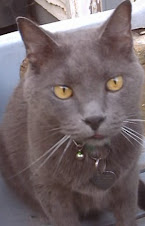
For the third year in a row, I, along with my constant companion


Bleubeard,


am answering the call to unearth buried treasure, a concept conceived by Seth Apter. Although this sounded like an easy task, it was more difficult than I at first suspected. Since I am looking back, I must also take into account what I am working on at the moment, as well as where my art is heading.


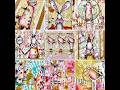
I've been making altered art for just over eight years. Granted, I had no training, so I was pretty raw in the beginning. In 2007, I started making collages. Above is one of those collages


Bleubeard took a special interest in.


I was working in altered books in 2008, and here is an example of a collage I call The Ringmaster's Ticket.


That same year I made this collage I call Behind the Eight Ball.


In 2009 I received a sewing machine and my focus expanded to include fabric. The first time I made a gelatin plate was in August, 2009.


I got so excited playing with the process, I had trouble stopping. I used everything from ink to paint to glazes.


I made gelatin prints, many of them monoprints, from both fabric and paper.


Every monoprint and ghost print in the above photo was made using various fabrics.


Above are examples of both paper and fabric gelatin prints.


The bird was masked using blue and beige glazes on muslin.


Those same glazes were used to make a nature inspired print.


These two leaves on checkered cotton


looked a bit like feathers when printed on a dictionary page.

I hope you have enjoyed a few of my buried treasures. Feel free to look around and check out my tutorials if you have time. However, I'm sure you will want to visit many other blogs too, and it all begins at Seth's The Altered Page. Enjoy and stop back again anytime.

Wednesday, July 27, 2011

It's nearly time to uncover the treasures

LinkBuried Treasure is a concept envisioned by Seth Apter. In Seth's own words:
With so many wonderful art blogs to follow, it is difficult to always find the time to keep up with every new post -- let alone have the time to visit the posts that were put up before you discovered each blog.

So...two years ago I started an annual treasure hunt. Buried Treasure is about digging deep to uncover some hidden gems.
For the past two years, I have joined Seth in his quest to uncover Buried Treasure. On July 23, 2009 and July 15, 2010, I uncovered the two posts I thought were worthy of mentioning or showing again. Although this sounds like a deceptively simple assignment, I am still digging for that one buried treasure that says everything I want to say when people uncover my post or possibly my blog for the first time. So be sure to join Seth tomorrow, because I'll be there and so will a few (or possibly many) of my blog friends.

By the way, I wish I could make a background like that one of Seth's above.

Tuesday, July 26, 2011

The final Wednesday in July, 2011 is WOYWW week #112

It's nearly Wednesday in my world and already Wednesday where Julia at Stamping Ground and most of my Wednesday visitors and friends reside. Last week, Julia commented that unloading 5 or 6 boxes each day in my basement studio sounded a bit energetic.


Normally, that would be a very realistic number of boxes. But, the way the packers garbled packed these boxes, I am lucky to deal with even two boxes a day.


Take for instance the containers you see on the top shelf in the middle set of shelves. These could have been carefully placed in a box. Instead, the contents were dumped into the box, then the containers thrown on top or in a different box. Talk about a nightmare trying to sort things. For example, three plastic containers of never-before-opened straight pins were dumped in the bottom of a box and the contents became open and loose. Talk about 500 straight pin pick-up!


I managed to find a small unpainted wooden rocking horse for your viewing pleasure. I'm fairly certain you have not seen this one before and I set it out in the open so you didn't have to search for it.


I have made a bit of headway on this mess, but right now I'm still looking for any excuse to not have to deal with these messes boxes. Unfortunately, with the temperature supposed to reach 109F (~40 C) today, being in the basement might be the coolest place I can be.

Don't forget to stop by Julia's because that's where so many of us go each week for What's On Your Workdesk? Wednesday!

Coffee on Tea Tuesday

Welcome to Tea Tuesday with Kimmie and the girls.


At this very moment, I'm wiping off the patio table in order to create a tutorial. Besides the bucket of water, I am enjoying a glass of ice coffee made the way I like it: full bodied with lots of half and half. I realize these photos are a bit blueish, but it's because it is not quite 6:00 am and the sun is just now peeking on the horizon.

In case you weren't here yesterday, I showed how to make a collograph plate, and today I'm setting up to make something using at least one. Unfortunately, I fear it is too hot to do more than one tutorial at a time in this unbearable heat that continues to grip the midwest with no relief from 100F + degree days in sight.


On the table are (from left) fluid acrylics, Shiva/Markel Paint Stiks, low tack masking tape, my coffee filled with ice cubes that are melting away as I take photos, handmade collograph plates, and some new fabric I washed and have chosen for these techniques. Have a great Tea Tuesday and stay safe and comfortable, whatever your weather situation.

Monday, July 25, 2011

A day of prep work

Now that my boxes are back from storage, you would think I would be chomping at the bit to organize and have fun in the basement. It's no secret I love to organize, and have written more than a few posts offering tips on organizing and organization. However, I'm overwhelmed with the amount of work ahead of me, and I'm now looking for any excuse to keep from unpacking.

I'm now finding even unpacking three boxes a day has become a chore. That is partly because the boxes that started out well packed by one person only lasted part of the first day of packing. It didn't take long till items started getting dumped into boxes, with their containers placed on top or sideways in the same or a different box. To add to the problem, some of the containers could have been easily and gently placed in boxes, but the packers chose to remove or dump the items, wrapping anything that looked like it might be damageable. Not breakable, but damageable. No wonder it took them three days to pack up my studio. So a box that should have taken no time than 15 minutes to unpack, now takes up to an hour.

As I begin to unpack my supplies, I am drawn to the empty boxes I now have sitting in a pile in my basement. Since I have wanted to try this technique ever since I saw it on Quilting Arts TV (shown on my local PBS station), I can now do so using one of my unpacked boxes and a boatload of my least favorite glue.


I cut two sides of one of those weighty corrugated boxes and found the perfect use for


Mod Podge! If you are a frequent reader of my blog, you know my dislike of Mod Podge. It remains sticky well after the project has dried, although the label claims it glues and seals all in one fell swoop. So today I am showing you what I started, using nearly two bottles of Mod Podge: first gloss, then when it was gone, matte!

This is the beginning of a collagraph. According to Wikipedia:
Collography (sometimes misspelled "collagraphy") is a printmaking process in which materials are applied to a rigid substrate (such as cardboard or wood).
The process of collography comes about from a collographic plate. After printing, the paper or fabric is called a collagraph, adding further confusion to the words. In the photo above, I have already placed embellishments onto the cardboard using a few dabs of white glue, but have not added the Mod Podge to what I am now calling the collographic plate. I applied three coats of Mod Podge to the other side of the above plate before I attached the embellishments to this side. And yes, the embellishments and the keys below were all in storage, and I am thrilled that I have found and unpacked them.


For this plate, I applied three coats of Mod Podge before I added the embellishments. At this point, they are not attached, but I have finalized this design, after moving keys around for a bit.

If you want to make your own collographic plate, here's what you have to do:

1. Cut an old, but sturdy cardboard box to a manageable size. The cardboard will now be referred to as a "plate." You will probably want your plate to be around 8.5 inches X 11 inches, or a similar size for those of you who work in metric.

2. Apply three coats of Mod Podge (often misspelled and mispronounced Modge Podge) to one side of the cardboard, allowing the Mod Podge to dry completely in between applications.

3. Practice saying the words "Mod Podge" and collography while waiting for the glue to dry. If you are still waiting, write the words so you will know what they sound and look like.

4. Gather and assemble your embellishments. Make sure that, to ensure proper printing, the embellishments are all a similar height.

5. When completely dry, flip the cardboard and do something I failed to do on one of these plates: add at least two coats of Mod Podge before adding your embellishments and final coat of glue. You will get less buildup in the recessed areas, and the Mod Podge will still coat your embellishments.

6. You may choose to use some white glue to position your embellishments on your plate prior to adding the Mod Podge. I did that with the coins and dragonflies, but didn't with the keys. Everything stuck well because the Mod Podge was still sticky on the plate with the keys, but I had not yet added Mod Podge to the other plate, thus the need for the white glue.

7. If you have not already added at least two coats of glue to the embellishment side of your plate, make sure you now cover it with at least three coats of Mod Podge. You will need these plates to be waterproof, not just water resistant. So be sure to apply the glue in one direction, then at a 90 degree angle, then at a diagonal.

8. When dry, admire your work of art, then gather your paints and papers or fabric and go to town making prints.

We'll try these plates soon to see if they are going to work and give the type of coverage I'm looking for. And you can expect a couple of tutorials to go along with those collographic plates.